
Return Visit to the Whitney Plantation
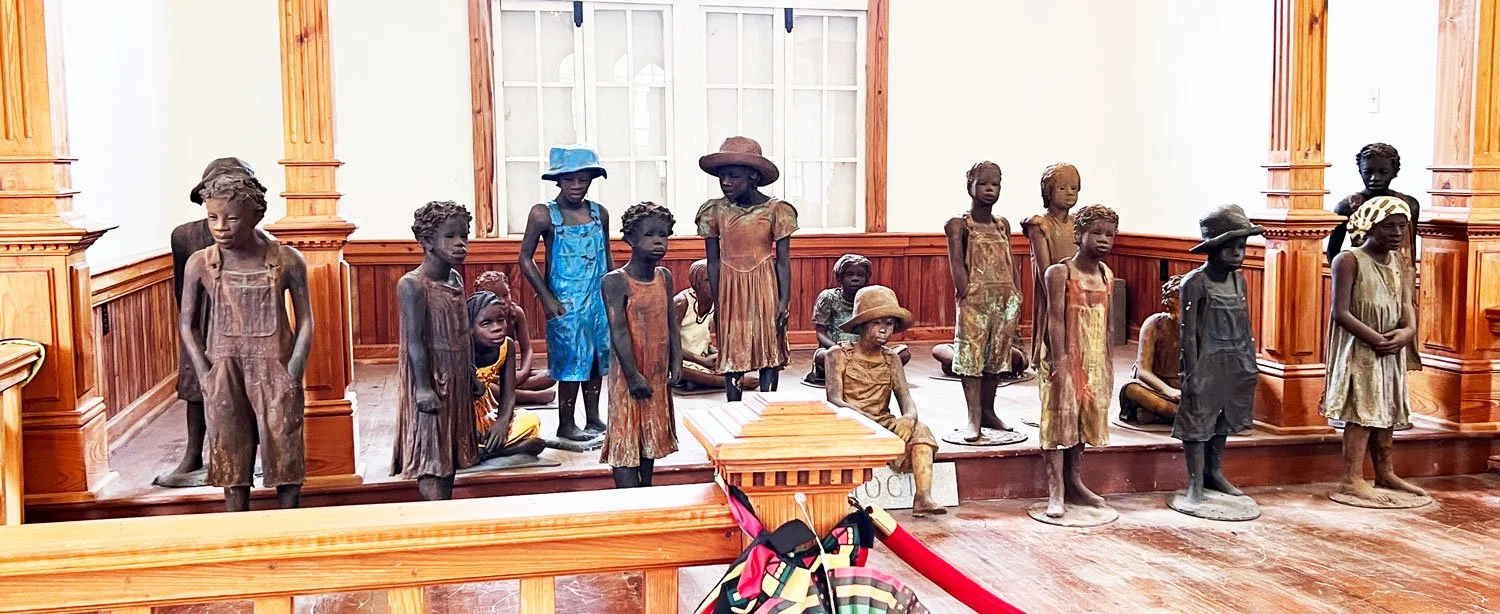
Statues of Whitney children in the chapel
Return Visit to the Whitney Plantation
I’ve twice visited the Whitney Plantation in Wallace, Louisiana, and I’d return again if I had another opportunity to do so. My first visit was in 2024 when I participated in a shore excursion while cruising on the Mississippi.
At the time, I’d never visited a plantation and I’d heard that the Whitney Plantation was unique in shining a light on the experiences of enslaved people, not only at that exact location but throughout Louisiana. I was not disappointed.
I found my visit very informative, but also frustrating because we did not have enough time to see everything that was there. This summer I made a return trip as part of the Black Freedom bus tour I participated in, sponsored by Carleton College. This time I saw almost everything, but had to rush through the museum exhibits. I did, however, take lots of pictures, allowing me to review some of the exhibits from the comfort of home.
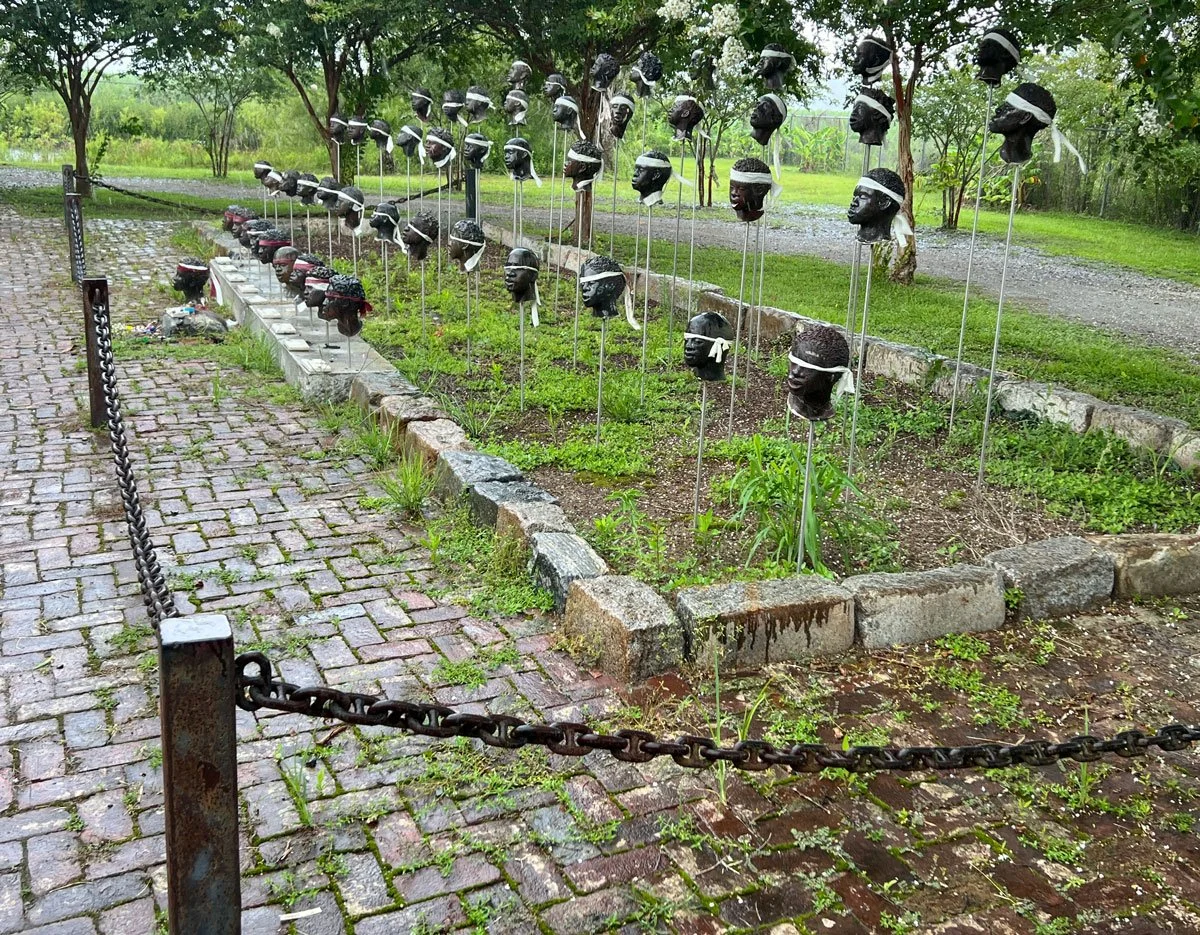
Memorial to those killed following an insurrection
In trying to expand my understanding, I’ve also been carefully studying the Whitney Plantation website. To my delight, I was able to take a complete tour of the property through their free tour guide app. I highly recommend it: Here’s the link to download the Whitney Tour app. Scroll down on the linked page.
During my visits, I had little opportunity to visit the gift shop. Now I’ve discovered many of their items can be purchased online: Store link. I was particularly impressed by the large assortment of books, fiction and non-fiction, for both kids and adults: Bookstore Link.
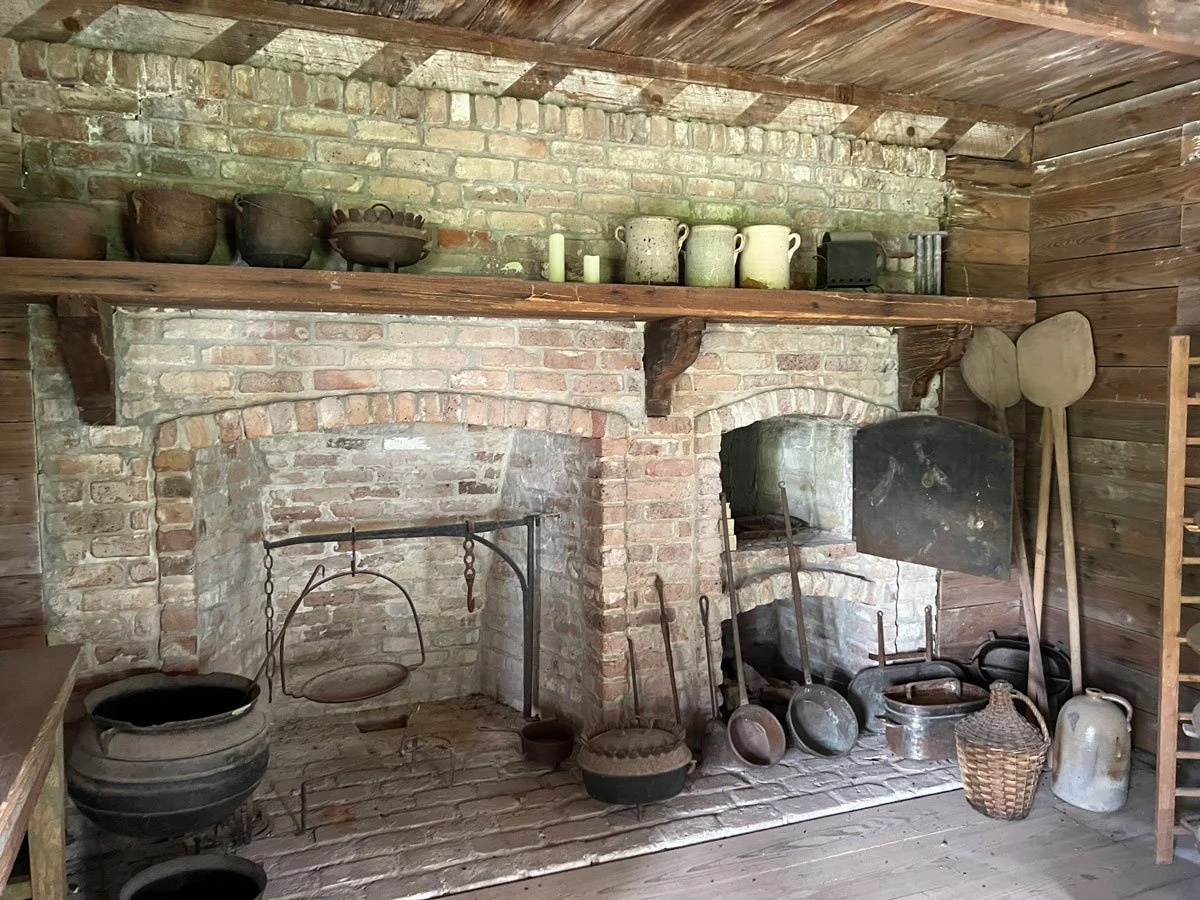
Recreated Whitney kitchen
Unlike other tourist destinations, Whitney Plantation helps you understand the experiences of the enslaved people. The property includes not only authentic buildings from the days of enslavement, but also memorial walls listing the names of all the individuals that have been identified as part of the local enslaved population. The names and dates are interspersed with quotations of enslaved people telling of their lives. The entrance to the facility includes a museum, which can be accessed without payment of the admission fee. The museum tells the history of slavery and the way of life experienced after slavery ended. This part of the tour is what was shortchanged. Both my visits had been scheduled for about two hours – 90 minutes for a guided tour and 30 remaining minutes for the memorial area, the museum and the gift shop – not enough time to do justice to all there is to see.
The remaining portion of this blog post represents something new for me. I asked the AI function on my computer to explain why you should visit Whitney Plantation. I reviewed it for accuracy and made a few small edits, but this is basically what the internet created for you. I’ve added a few photos.
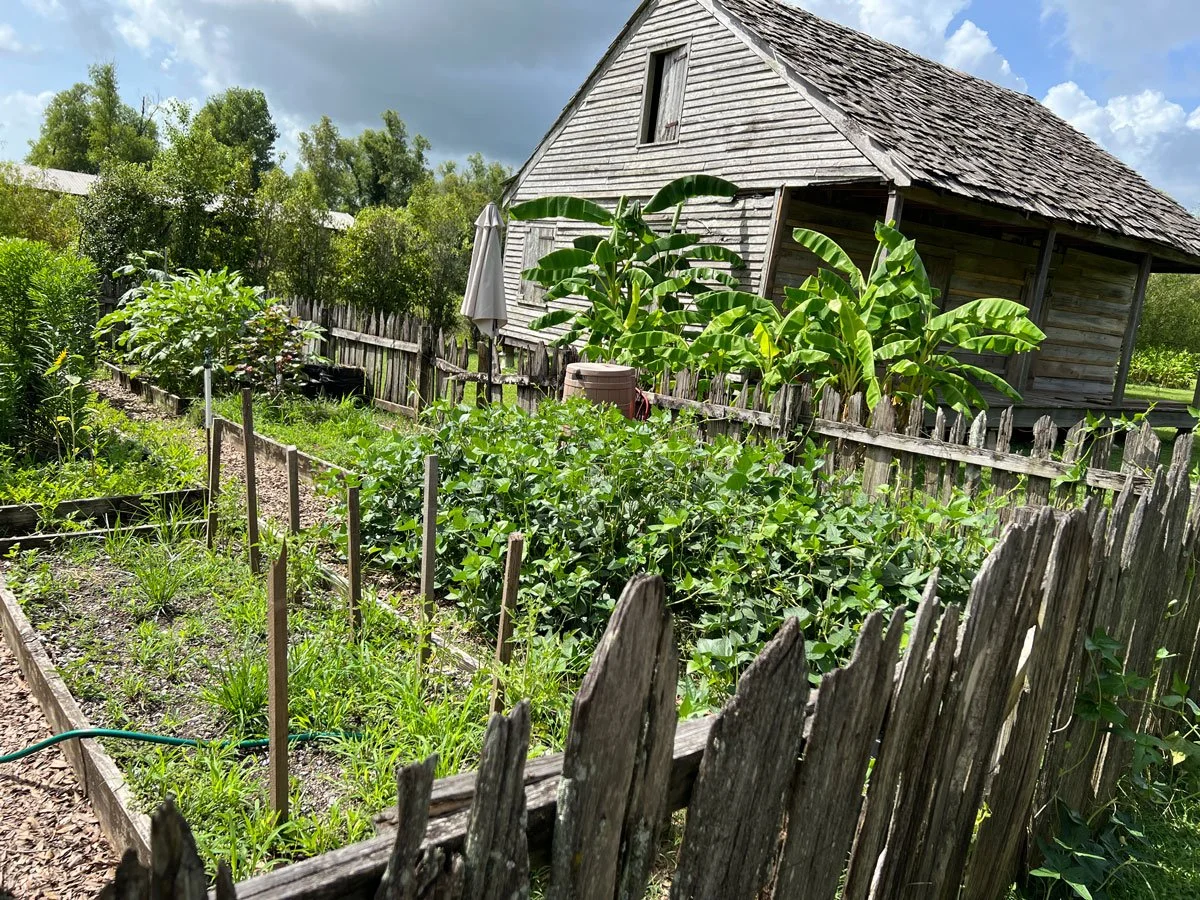
Whitney Garden
Why You Should Visit the Whitney Plantation in Louisiana
Understanding History, Honoring Memory, and Inspiring Change
Nestled along the banks of the historic Mississippi River, the Whitney Plantation stands as one of Louisiana’s most compelling and important sites, offering a transformative lens into the history of slavery in America. Unlike many antebellum plantations that focus on the grandeur of the “Big House” and the lives of the wealthy white owners, the Whitney Plantation is explicitly and unapologetically dedicated to telling the story of the enslaved. A visit here is not just a tour, but a deeply educational, emotional, and thought-provoking journey. Here are the reasons why the Whitney Plantation deserves a place on your travel itinerary.
A Unique and Powerful Perspective on American History
The Whitney Plantation sets itself apart from other plantation museums by centering the narratives of enslaved people. As you walk its grounds, you are confronted with the reality of lives lived in bondage—a reality often glossed over or romanticized elsewhere. The focus is not on the opulence of the main house, but on the lived experiences, resistance, and resilience of the men, women, and children who toiled here and across the South.
Through first-person narratives, original artifacts, and immersive exhibits, visitors are compelled to bear witness to stories long ignored in mainstream history. The plantation provides a counter-narrative to the mythologies of the “Old South” and invites reflection on the true cost of its wealth and culture. This powerful approach makes the Whitney Plantation not just a site of memory, but a place of reckoning—an essential stop for anyone seeking to understand the depth and breadth of America’s past.
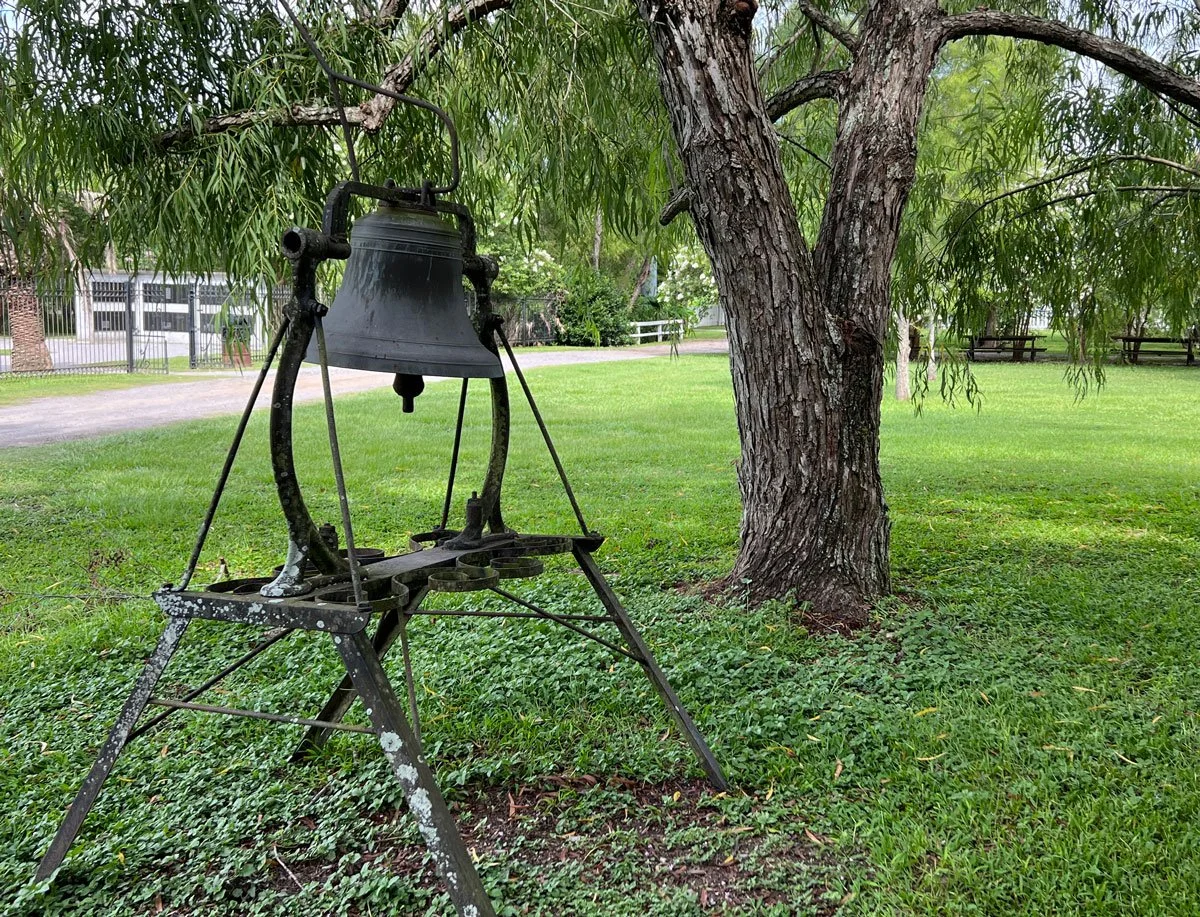
Wake-up and get-to-work bell
Monuments and Memorials to the Enslaved
One of the most striking aspects of the Whitney Plantation is its commitment to honoring those whose stories have too often been lost. Throughout the grounds, visitors will find sculptural monuments, memorial walls, and art installations bearing the names of enslaved individuals who lived, worked, and died on Louisiana plantations.
The Wall of Honor, for instance, is etched with the names of over 100,000 people enslaved in the state. The Field of Angels memorializes the 2,200 enslaved children who died in St. John the Baptist Parish before the abolition of slavery. These monuments do not just commemorate; they personalize and humanize, reminding each guest that the system of slavery was not merely an abstract evil, but a tragedy experienced by countless individuals with names, families, and dreams.
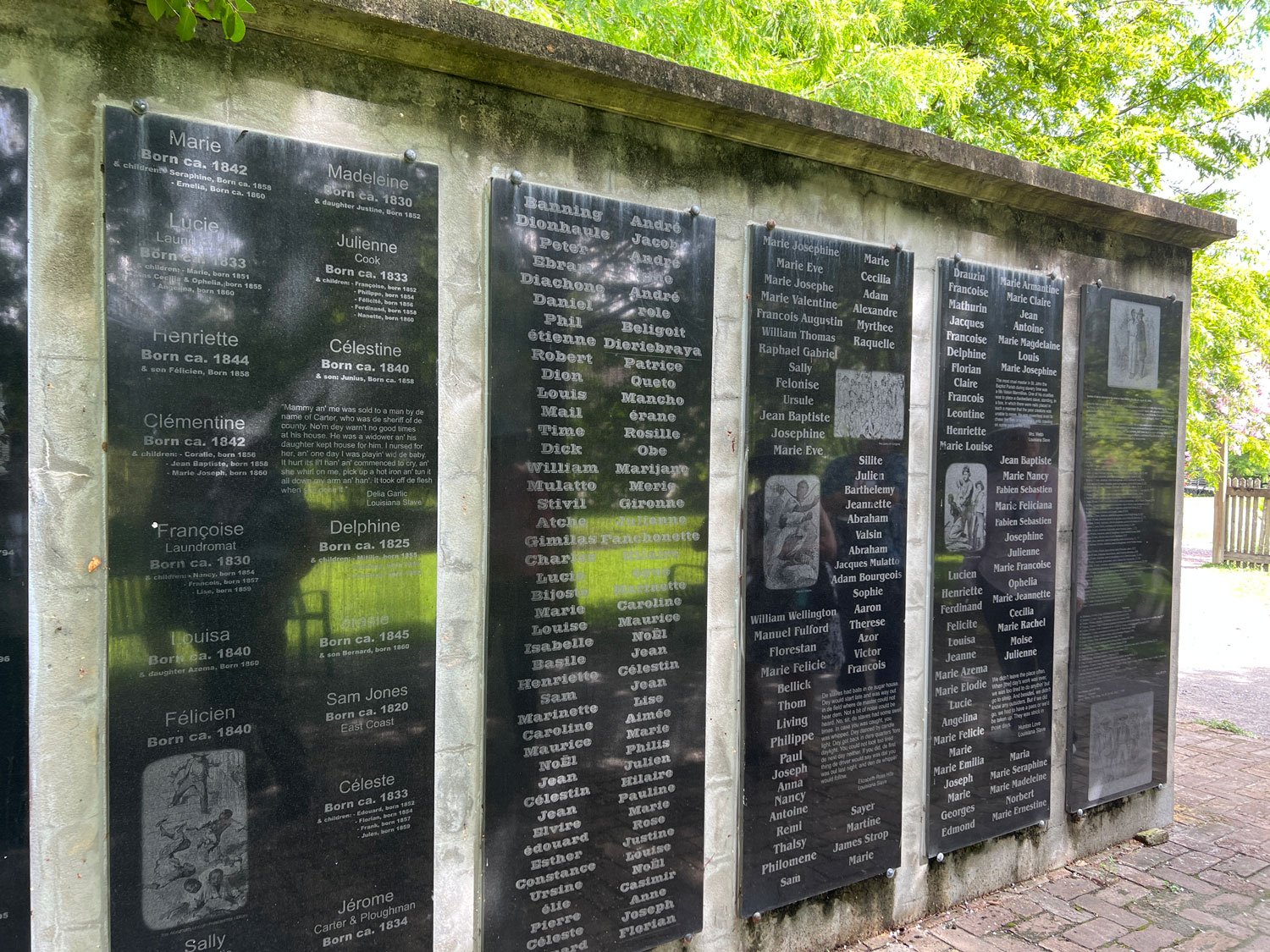
One section of the Whitney memorial wall
Educational Tours Led by Knowledgeable Guides
Visiting the Whitney Plantation means engaging with expert historians and guides who are deeply invested in the mission of the site. Their tours are well-researched, empathetic, and honest, helping visitors understand the day-to-day realities of plantation life for the enslaved, as well as the larger economic, social, and political forces that shaped their world.
Docents share personal stories drawn from oral histories and archival records, connecting the past to the present. The tours do not shy away from difficult truths, and guests are encouraged to ask questions and reflect on what they learn. This openness fosters a learning environment that is both challenging and healing, making the history feel immediate and real.
Preserved Historic Structures and Grounds
The Whitney Plantation encompasses many authentically restored buildings, including slave cabins, the “Big House,” a church, and outbuildings such as a kitchen and blacksmith shop. Walking through the original slave quarters, visitors gain a sense of the harsh conditions endured by the enslaved. The Antioch Baptist Church, built by formerly enslaved people after the Civil War, provides a powerful space for contemplation and remembrance.
The plantation’s grounds are equally evocative. The sweeping oaks and Spanish moss may be beautiful, but they are haunted by history; every step is a reminder of the forced labor that shaped and maintained the landscape. Interpretive plaques and installations throughout invite guests to linger, ponder, and pay respect.
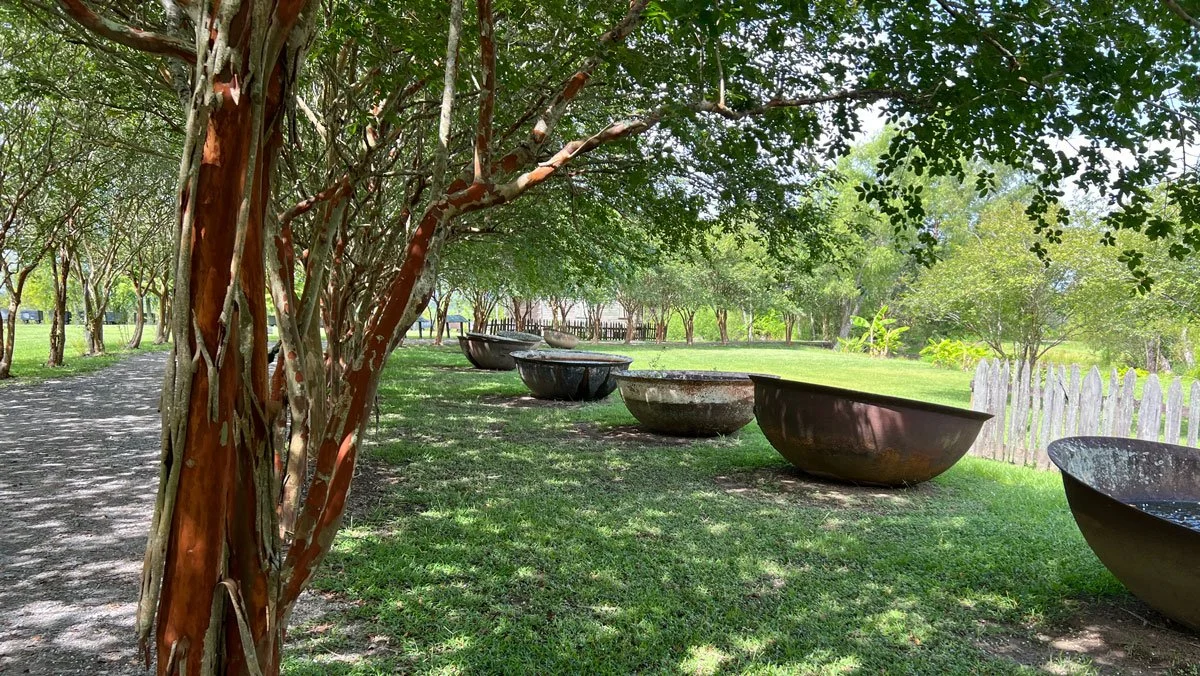
Huge bowls used to process sugar
First-Person Narratives and Oral Histories
Central to the Whitney Plantation’s mission is giving voice to the voiceless. The museum features powerful narratives from the Federal Writers’ Project’s Slave Narrative Collection, gathered in the 1930s. Through written transcripts, and artistic displays, these stories allow guests to hear directly from those who endured slavery and survived to tell their tales.
These firsthand accounts are wrenching, vivid, and unforgettable. They reveal the complexities of plantation life, the pain of family separations, and the small moments of resistance and hope. By foregrounding these voices, the Whitney Plantation ensures that visitors leave with a richer, deeper understanding of history’s human dimension.
Confronting America’s Legacy and Inspiring Change
A trip to the Whitney Plantation is not always easy, but it is always impactful. The experience challenges guests to confront uncomfortable truths about the legacy of slavery and its enduring impact on American society today. By engaging with this history honestly, visitors are called to reflect on issues of racial injustice, inequality, and the long shadows cast by the past.
Many leave the Whitney Plantation changed—more aware, more empathetic, and more committed to justice. It is a place for learning, but also for action, reminding each visitor that history is not static, but a living force shaping our present and future.
A Site of National and International Importance
Since opening to the public in 2014, the Whitney Plantation has drawn visitors from across the United States and around the world. It has been lauded by historians, educators, and activists as a model for how to interpret difficult histories with integrity and compassion. Its exhibits and programming serve as vital resources for teachers and students, helping to fill the gaps left by traditional curricula.
By visiting, you participate in a broader movement to reclaim and honor the stories of the enslaved, ensuring that their legacies are recognized and remembered.
Planning Your Visit
The Whitney Plantation is located in Wallace, Louisiana, about an hour’s drive from New Orleans. The site is open to visitors year-round, with both guided and self-guided tours available. Gift shops offer books, art, and educational materials, allowing you to continue learning long after your visit ends.
Be prepared to spend several hours exploring the grounds and exhibits. Bring an open mind and a readiness to listen—to the stories, the history, and the voices that echo through time.
Conclusion
To visit the Whitney Plantation is to embark on a journey of memory, empathy, and understanding. It is a place where the silenced are finally heard, and where the history of slavery is preserved not as a curiosity, but as a vital, ongoing conversation. In an era when confronting the past is more important than ever, the Whitney Plantation stands as a beacon of truth and remembrance. By choosing to visit, you honor the lives of those who came before—and help to build a more just and compassionate world.
Created by Carolyn Hayek with assistance of AI resources.