
Equal Justice Initiative - Transforming Montgomery
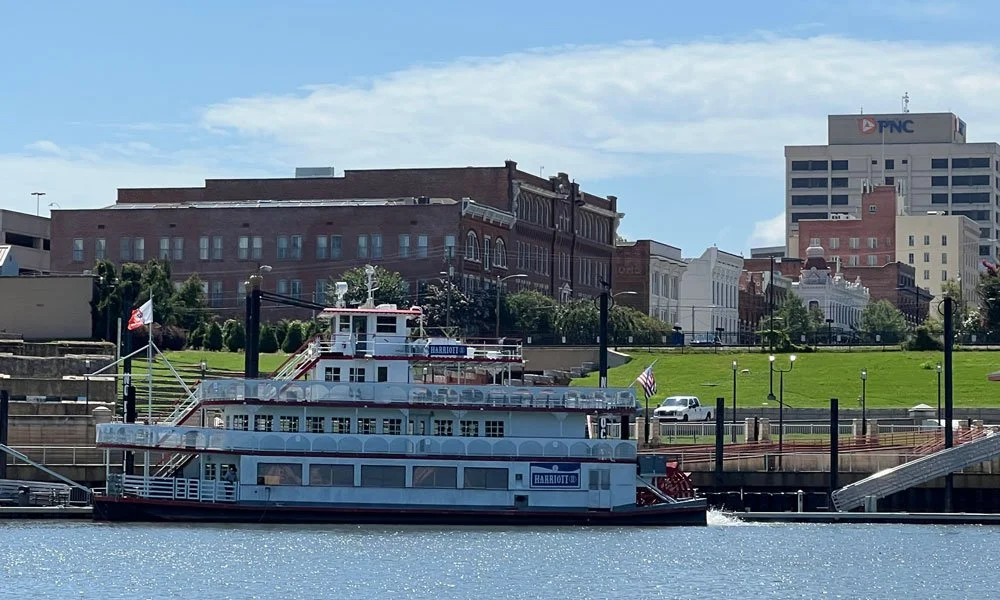
Montgomery waterfront - Alabama River
Equal Justice Initiative – Transforming Montgomery, AL
Montgomery, Alabama, is a city with a declining population of under 200,000. Once known as the Capital of the Confederacy, its current population is 63% Black, 28% White and 3.24% Asian. The average per capita income is $41,474 with a median household income of $55,687, according to the World Population Review website.
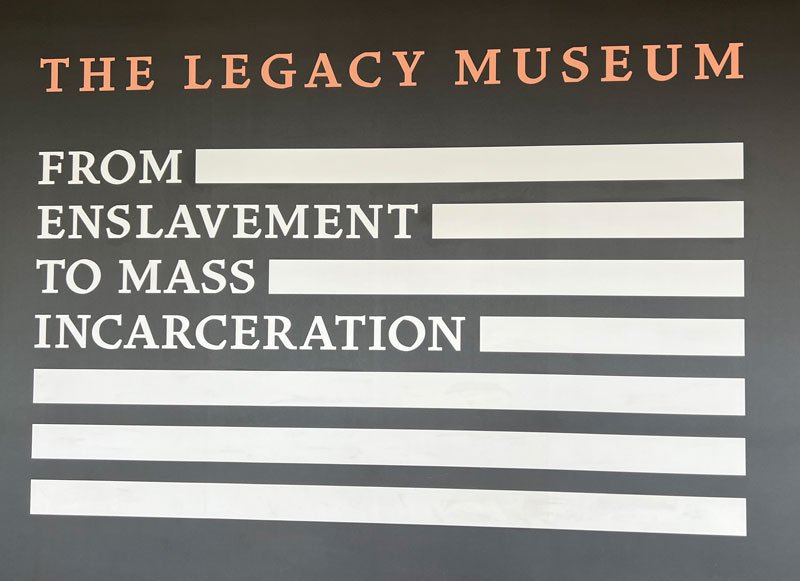
Sign at entrance to The Legacy Museum, Montgomery, AL
While riding through Mongomery’s downtown in June, 2025, with 15 fellow travelers, three African American guides, and an amazingly talented and friendly bus driver, on my Black Freedom Tour excursion bus, there appeared to be little traffic and few pedestrians, until we arrived at The Legacy Museum, privately financed by the Equal Justice Initiative , headed by Bryan Stevenson , attorney and author of the book Just Mercy: A Story of Justice and Redemption, published in 2014. The Legacy Museum opened on April 26, 2018, along with the nearby National Memorial for Peace and Justice, sometimes referred to as the “Lynching Memorial” since it is a quiet refuge for contemplating the more than 4,000 lynching deaths that occurred, mostly in Southern States, between 1877 and 1950.
The Legacy Museum was bustling with activity, including many families and student groups. The legacy illustrated in the museum is the story of our United States history of racial inequality following the Emancipation Proclamation signed September 22, 1862. While President Lincoln declared enslaved Americans in the Confederate States to be free as of Jan. 1, 1863, that was only the beginning of the process toward achieving Black Freedom and equality. Obstacles to freedom and well-being for Blacks included lack of education, sharecropping, Jim Crow laws, mass incarceration, convict leasing, lynching, red-lining, and failed promises of benefits. These obstacles are present today in gerrymandering, excessive jail terms, voting obstacles and the lingering effects of poverty, poor schools, and lack of capital.
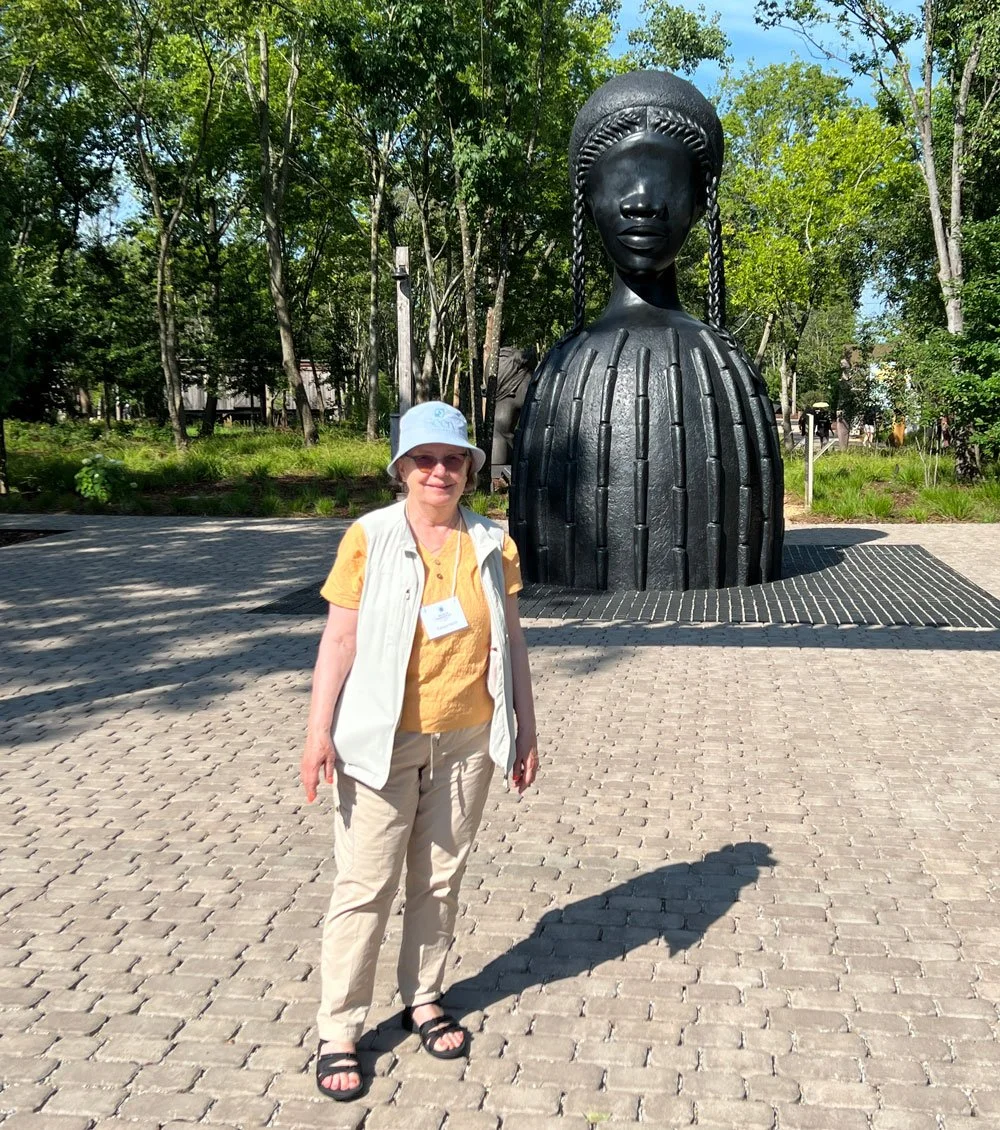
Carolyn Hayek at the entrance to the Freedom Monument Sculpture Park
The museum was so busy, we had to find another lunch spot to avoid the long line in the museum cafeteria. Lucky for us, there were two other restaurants nearby, which we learned were also established by the Equal Justice Initiative. It turns out this important area of downtown Montgomery is being transformed with two additional facilities scheduled to open later this year: a conference center called The Elevation Convening Center and an adjoining hotel and parking garage. A park and exhibit in honor of the Selma March are also planned. As I understand these projects, they are all privately funded by the Equal Justice Initiative, which should make them immune from federal funding cutbacks and federal efforts to hide uncomfortable aspects of our racial history.
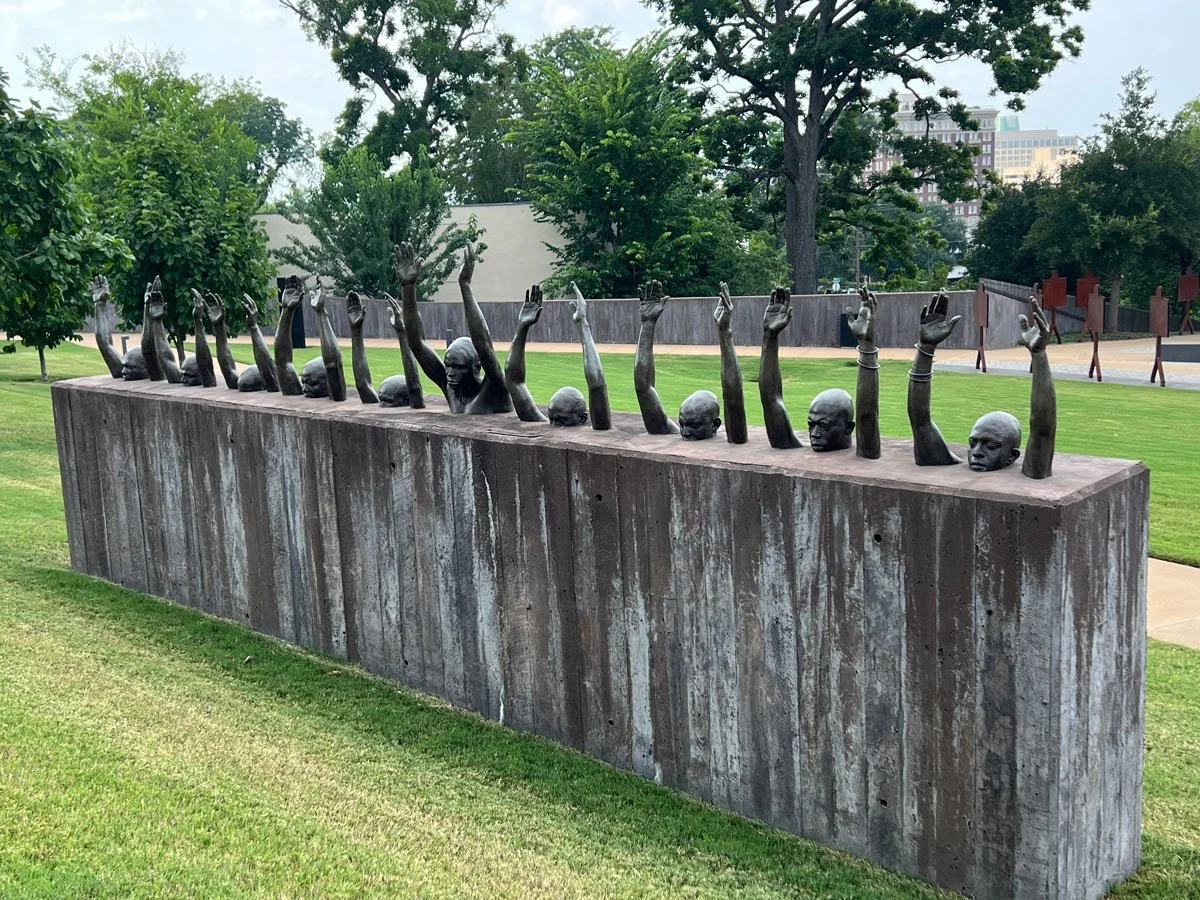
Sculpture at the National Memorial for Peace and Justice
Our next destination was The National Memorial for Peace and Justice, which also opened on April 26, 2018. It consists of a large grass lawn surrounding an open-air building in which are suspended columns with the names of lynching victims, organized by county. Additional columns are laid out like coffins in an adjoining open area, waiting for the individual counties to create a spot for them to be displayed in the local area they represent. It appears that few or none of the counties have taken up that invitation. The memorial presents a hushed and respectful setting for contemplating the lives lost and the injustice the deaths represent.
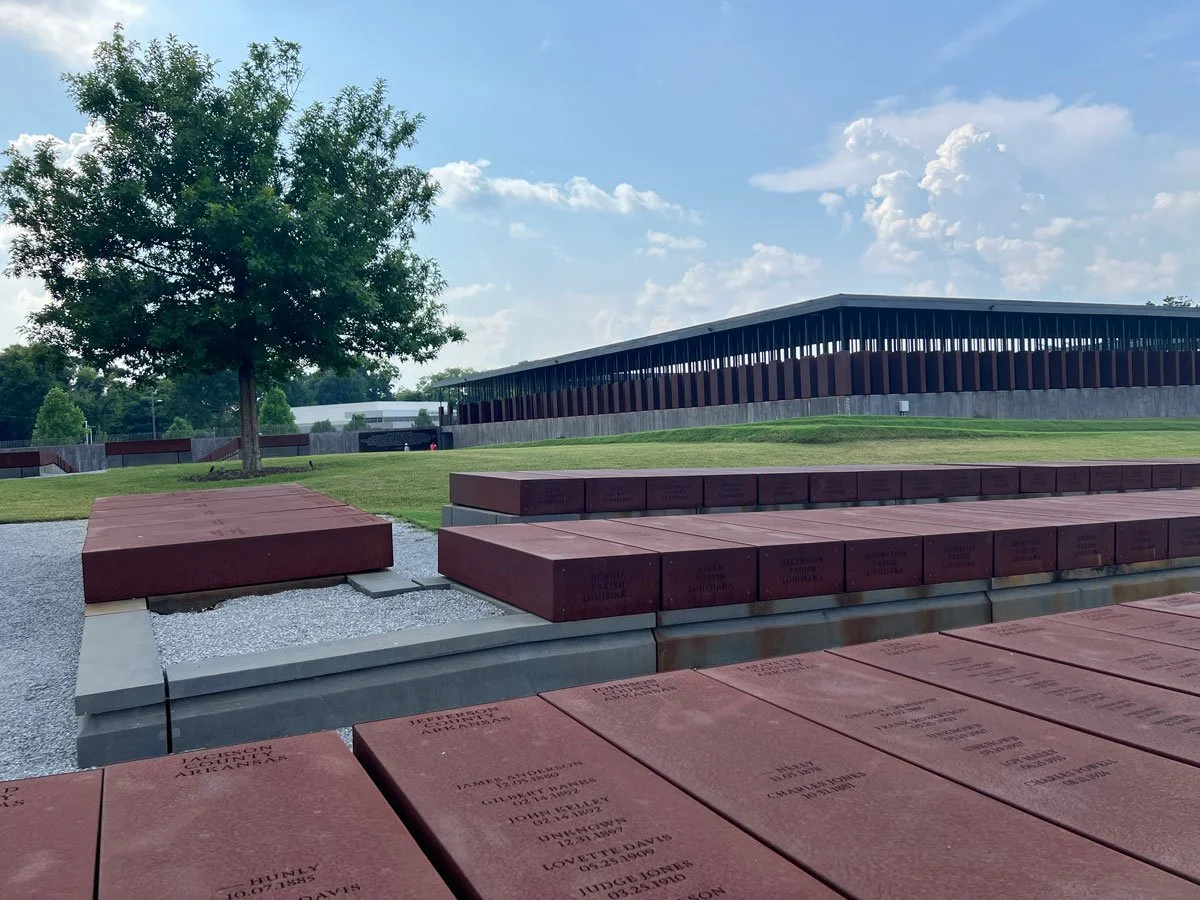
National Memorial for Peace and Justice
The 2021 addition to these structures is called the Freedom Monument Sculpture Park, an outdoor sculpture garden located on 17 acres of land, adjoining the Alabama River. The sculptures are in honor of the 10 million Black people who were enslaved in America and who provided the labor which enabled the agriculture and industry which formed the foundation of our new country. The sculptures are both beautiful and unsettling. To preserve the peaceful atmosphere of the park, most photography is prohibited. However, photos were encouraged at the park entrance and at the massive wall which contains the 122,000 surnames of the newly freed Blacks taken from the 1870 census.
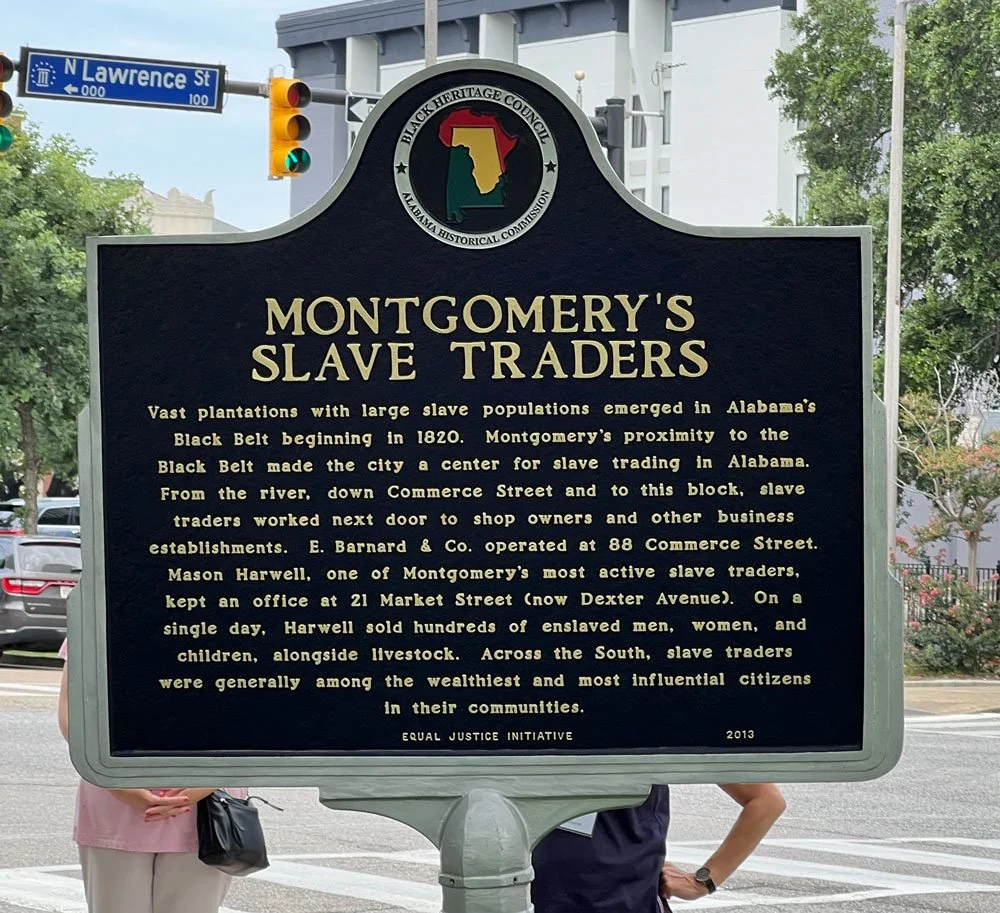
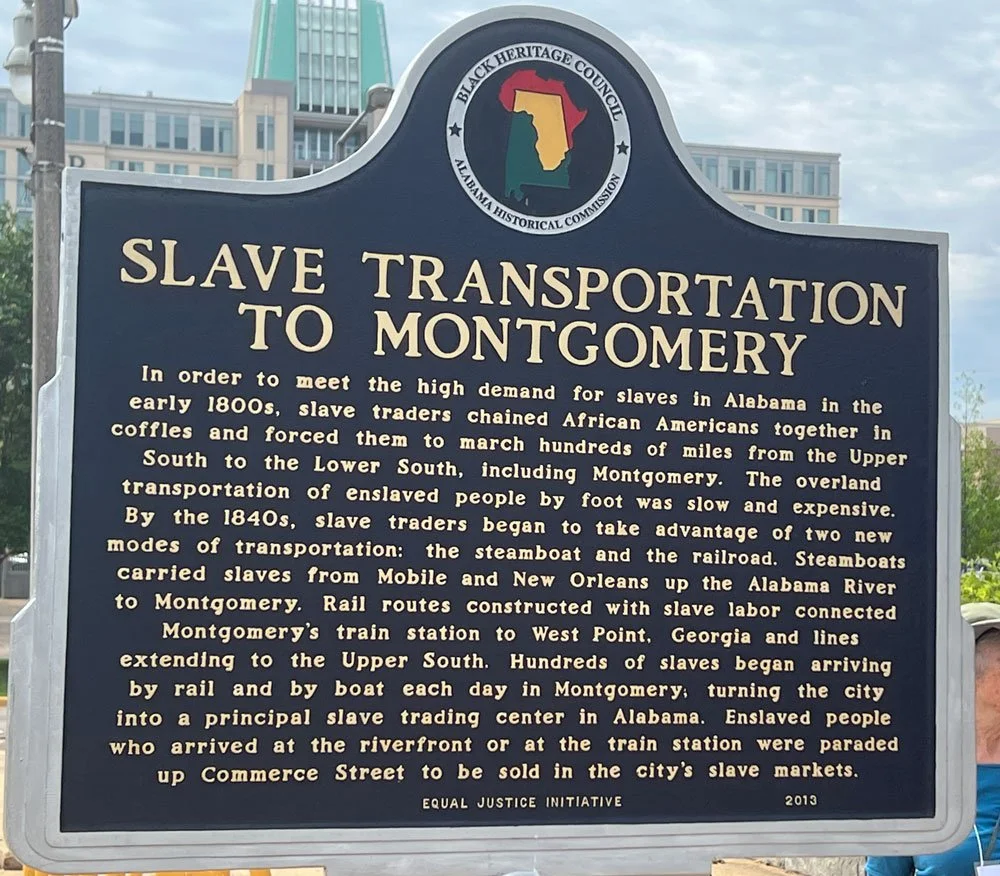
Historical Marker provided by Equal Justice Initiative
The existing contributions of the Equal Justice Initiative to the City of Montgomery are impressive and the buildings expected to open later this year will add to the educational and tourist attractions of the city. The Equal Justice Initiative also has plans to increase the number of Historical Markers around the city to identify the locations of important civil rights activities occurring over the years. There have been some delays in getting them approved for installation by the city, but hopefully that will be cleared up soon.
I highly recommend a visit to Montgomery to see the sites I’ve mentioned here. The Equal Justice Initiative website provides an introduction to help prepare you for your visit. Meanwhile, if you haven’t read Bryan Stevenson’s book Just Mercy, do it now. You might also want to view the 2019 film based on the book. All of Bryan Stevenson’s accomplishments are impressive and have inspired many others to support his projects. He is well deserving of the many accolades he has received. Let his writings and projects inspire you to help move the arc of history toward justice.

Entrance to Freedom Monument Sculpture Park